

Lei Diansheng was born on December 11, 1963, in a small mountain village in Hulan District, Harbin, Heilongjiang Province. A renowned long-distance hiker, he holds the world record for the longest foot journey and was the first Chinese person to trek across the Lop Nur Desert. He has broken multiple Guinness World Records for his hiking feats and is often referred to as the “modern-day Xu Xiake.”
Lei Diansheng was an excellent student in his childhood. When he was in fourth grade, his mother fell seriously ill, so he dropped out of school to care for her. That winter when he was 13, his mother passed away due to illness. He then took on the responsibility of caring for his seriously ill father. When he was 15, his father also died from illness. After his father passed away, he packed a bag and set out to make his own way, vowing to return at eighteen to join the army and serve his country. At the age of 18, I signed up to join the army and passed the medical examination, only to have my place taken by a primary school classmate.
After seeing the Xu Xiake stamps issued by China Post in 1987, he conceived the idea of hiking across China on foot, wanting to behold his country’s magnificent landscapes. In 1989, in the Greater Khingan Range, he met Yu Chunshun, a Chinese fellow trekker and explorer. After a brief exchange, he felt he had encountered a modern-day Xu Xiake.

Lei Diansheng began preparing for ten years to hike, needing to earn money and maintain a healthy body; to this end, he ran ten kilometers every day, did 2,000 sit-ups, and 800 push-ups. Lei Diansheng only attended primary school for three and a half years; to make a living, he worked as manual labor, engaged in sales promotion, and sold goods at street stalls. In 1996, Yu Chunsun died during an expedition in the Lop Nur Desert. Before heading toward Lop Nur, Yu Chunsun had extensive hiking experience, and everyone placed high hopes on him; however, the outcome showed that conquering Lop Nur was not as easy as imagined. Yu Chunsun failed to walk out of Lop Nur, and his body was later discovered. People speculated that Yu Chengshun died of thirst, possibly due to taking a wrong direction. After Yu Chunsun’s death, foreigners also wanted to explore the western regions, but Lei Diansheng felt that as a descendant of Yan and Huang and a child of China, this matter should be done by Chinese people.
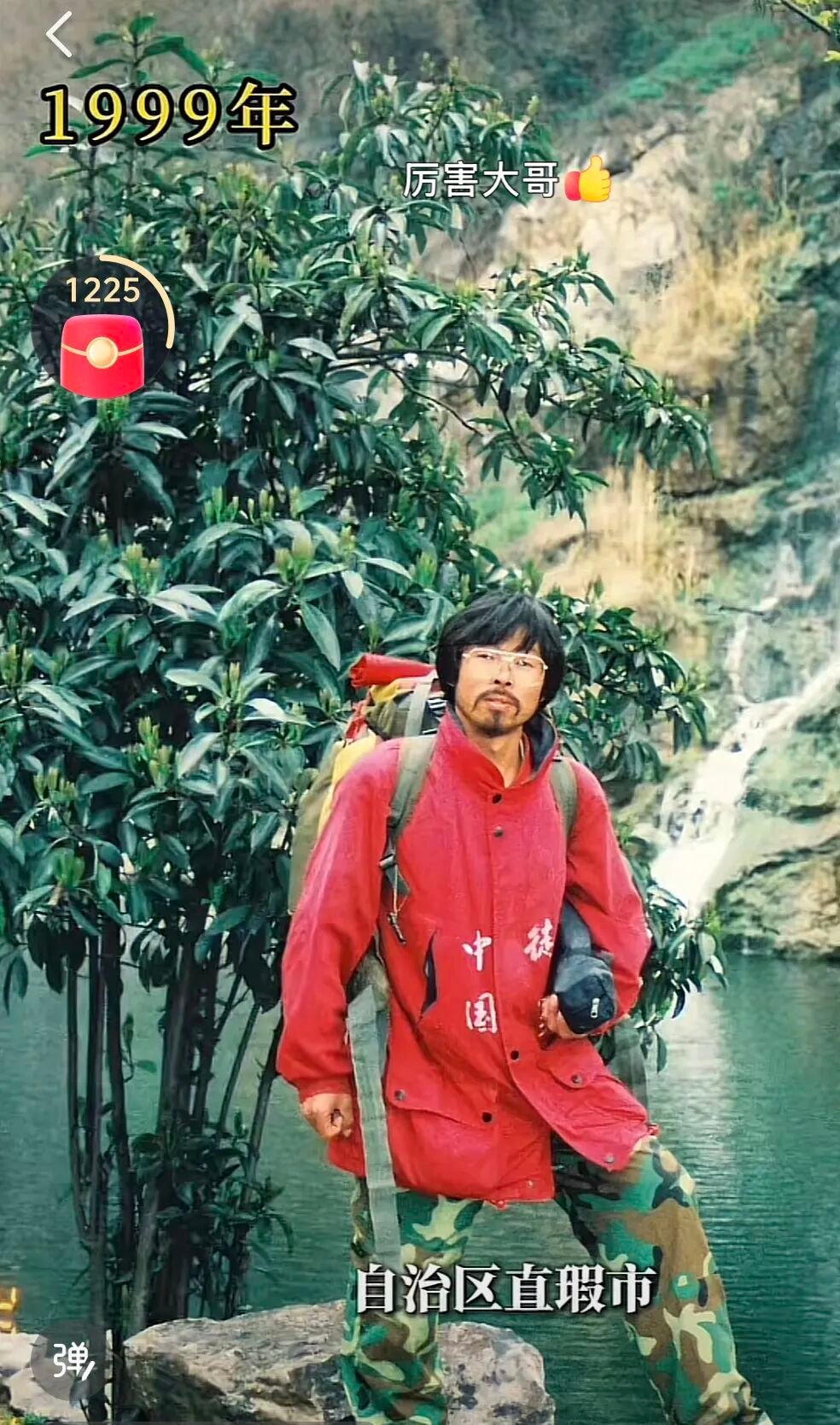
From 1998 to 2008, for ten consecutive years, I traversed the highest place on Earth, Mount Everest, at an altitude of 7,000 meters with its glaciers; the lowest place, Aiding Lake in Turpan, Xinjiang, at a negative elevation of -154 meters; the hottest place, the Taklamakan Desert in Xinjiang, where surface temperatures reached +74 degrees Celsius; and the coldest place, Mohe, China’s “Arctic,” where temperatures dropped to -53 degrees Celsius during the coldest part of winter. During this period, I wore out 52 pairs of shoes and lost 19 toenails from walking. I encountered robberies 19 times, losing five cameras in the process. I came across wild animals over 40 times. In Tibet’s uninhabited area, I was surrounded by a pack of over 20 wolves near my tent; I burned clothes, set off firecrackers, sprayed insect repellent, and wrote a will before finally escaping alive. In a primeval forest, I was bitten by a venomous snake and simply used a knife to cut away the damaged flesh and squeeze out the poison. In the Gobi Desert, there were stretches of 10 or even 20 days without food, forcing me to eat rats, lizards, and ants. For the final leg of the journey, I chose Lop Nur, departing from Yangguan in Dunhuang, Gansu.
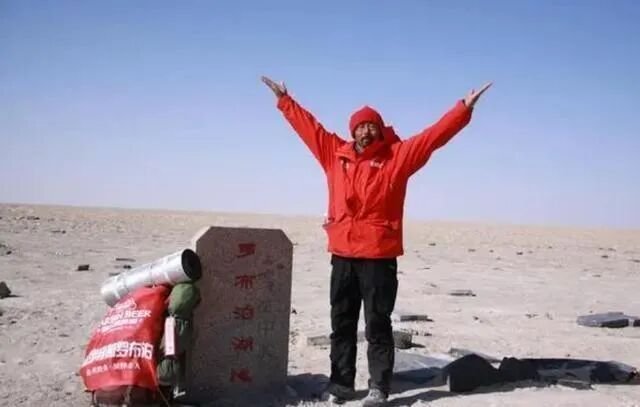
Before setting off, Lei Diansheng wrote a long letter to his sister; it was less a letter than a farewell message, for he knew that this parting might be eternal. After entering Lop Nur and passing through the ancient kingdom of Loulan, Lei Diansheng arrived at Yu Chunsun’s grave. Gazing at his friend’s tomb, he felt a welter of emotions, recalling how they had once discussed hiking experiences together. Knowing that conquering Lop Nur had been his friend’s lifelong dream, Lei Diansheng paid his respects briefly before continuing on, determined to fulfill that dream in his friend’s stead with concrete action.

After 31 days, Lei Diansheng finally walked out of Lop Nur, thereby becoming the first person in the world to conquer it. He traveled alone for 81,000 kilometers—equivalent to two laps around the equator—and compiled over one million words of material, took more than 40,000 photos, and collected several tons of various materials. He documented his decade-long preparation and practice, as well as his experience of walking 81,000 kilometers and crossing Lop Nur, into a book titled *Belief*. If interested, you can read it.